

9th Oct, 2026
Review by: Chris Spencer, Addiction Specialist
Cannabis, Depression and Long-Term Use: When It May Be Time to Seek Help
- Drug Addiction Treatment Centre
A middle-aged woman who has used cannabis for many years may begin to wonder whether it is still helping her cope, or whether it has become part of the problem. She may use it to switch off, sleep, manage anxiety, numb difficult feelings or create distance from depression. Over time, however, cannabis can become woven into daily life so gradually that it is difficult to see its effect on mood, motivation, relationships and confidence.
This is not a matter of blame or weak willpower. The relationship between cannabis, drugs and depression is complex. Cannabis use does not automatically cause depression, and depression can exist before cannabis use begins. However, current research shows a consistent association between cannabis use and depressive symptoms, while people with depression may also be more likely to use cannabis in an attempt to manage how they feel.
For someone who has used cannabis over a long period, the most useful question is not whether she “has an addiction” based on one sign alone. It is whether her use is becoming difficult to control, is causing harm, or is getting in the way of the life and mental health she wants.
Cannabis use and depression: understanding the two-way relationship
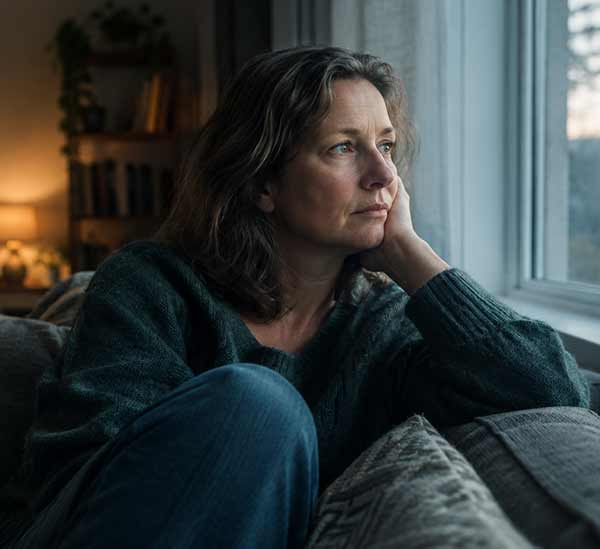
Cannabis can feel helpful in the short term. It may temporarily reduce tension, create emotional distance or make it easier to avoid painful thoughts. Yet short-term relief is not always the same as long-term improvement.
A 2024 systematic review found that cannabis use is associated with increased depressive symptoms and a less favourable course of major depressive disorder. This does not prove that cannabis is the sole cause of depression in every person. Other factors, including trauma, physical health, relationships, financial pressure, genetics and previous mental-health difficulties, may also be involved.
The relationship can work in both directions:
A person with depression may use cannabis to cope with low mood, poor sleep or emotional pain.
Frequent or dependent cannabis use may worsen sleep, motivation, anxiety, mood stability or isolation for some people.
Stopping or reducing cannabis can bring withdrawal symptoms, including irritability, sleep disruption and low mood, which may make depression feel temporarily worse.
Ongoing depression can make it harder to maintain routines, attend treatment and manage cravings.
This is why a good assessment should look at the whole picture. Treating cannabis use while ignoring depression may leave a major trigger unaddressed. Treating depression while overlooking regular cannabis use may also make it harder to understand what is affecting mood and functioning.
When long-term cannabis use becomes a problem
Cannabis use disorder is a recognised health condition. It does not mean that everyone who uses cannabis has an addiction. It refers to a pattern where use becomes difficult to control or continues despite negative consequences.
Possible warning signs include:
Possible warning signs include:
Using more cannabis than intended or finding it difficult to cut down.
Spending a great deal of time obtaining, using or recovering from cannabis.
Strong cravings or feeling unable to relax without it.
Continuing to use despite low mood, anxiety, relationship problems or work difficulties.
Losing interest in activities that once mattered.
Using cannabis alone, in secret or at times when it creates risk.
Feeling irritable, restless, low or unable to sleep when trying to stop.
Repeatedly deciding to reduce use but returning quickly to the same pattern.
For a middle-aged woman, these changes may be easy to hide. She may still be working, caring for family, managing a home or appearing outwardly capable. But functioning on the surface does not mean the pattern is harmless. If cannabis has become the main way of coping with depression, stress or loneliness, it may be time to seek professional support.
The European picture: cannabis treatment is increasing
Cannabis remains the most commonly used illicit drug in Europe. The European Union Drugs Agency estimates that around 24 million European adults aged 15 to 64 used cannabis in the previous year, while approximately 4.3 million were daily or almost-daily users.
In 2023, an estimated 106,000 people entered specialist drug treatment in the European Union, Norway and Türkiye for cannabis-related problems. Cannabis accounted for 34% of all treatment demands and 42% of first-time treatment entrants. These figures do not mean that every regular cannabis user needs rehabilitation. They do show that cannabis dependence is a real treatment issue, not something that should be dismissed because the drug is often seen as less serious than alcohol, cocaine or opioids.
Research on treatment in Europe also shows that cannabis-specific services remain limited in many countries. Psychosocial approaches, including motivational interviewing and structured therapy, are the most established treatments. There is currently no approved medication specifically for cannabis use disorder.
Why depression needs treatment alongside cannabis use
Depression is more than feeling sad. It may involve persistent low mood, loss of interest, changes in sleep or appetite, fatigue, poor concentration, feelings of guilt or hopelessness, and thoughts that life is not worth living.
When depression and cannabis use occur together, both need proper attention. The aim is not to force a person to choose which problem matters more. It is to understand how they interact and create a treatment plan that addresses both.
NICE guidance states that evidence-based psychological treatment, particularly cognitive behavioural therapy, should be considered for depression and anxiety in people who misuse cannabis or stimulants. Treatment may also include work on coping skills, emotional regulation, relapse prevention, trauma where relevant, relationships and rebuilding a daily routine that is not organised around cannabis use.
If someone has severe depression, thoughts of self-harm, psychotic symptoms, or feels unable to keep themselves safe, urgent medical or mental-health support is needed. Residential rehabilitation is not a substitute for emergency psychiatric care, but it may be part of a wider treatment pathway once the appropriate level of support has been assessed.
FIND THE SUPPORT THAT FITS YOUR NEEDS
Speak to us today for a confidential, no-obligation conversation
When residential rehab in Marbella may be appropriate
For someone who has used cannabis for a long time and is also living with depression, stepping away from familiar routines can sometimes help. At our residential rehab centre in Marbella, Spain, treatment can provide a structured environment away from the people, places and pressures linked to regular cannabis use.
Residential addiction treatment is not right for every person. It may be considered when outpatient support has not been enough, when home life is unstable, when cannabis use is closely tied to depression or isolation, or when someone needs a more focused period of assessment and treatment.
For people travelling from the UK or elsewhere in Europe, residential rehab in Marbella can offer time away from familiar triggers while receiving professional addiction support. A treatment assessment should consider mental health, physical health, current substance use, past attempts to stop, support at home and whether residential treatment is clinically appropriate.
Frequently Asked Questions
Can cannabis make depression worse?
Cannabis does not affect everyone in the same way, and it may not be the only reason someone is depressed. However, research shows an association between cannabis use and worse depressive symptoms or outcomes. Regular use can also make it harder to see clearly what is affecting mood.
Is cannabis withdrawal real?
Yes. People who use cannabis regularly may experience irritability, anxiety, sleep problems, reduced appetite, restlessness and low mood when they stop. These symptoms are usually not medically dangerous in the way that alcohol withdrawal can be, but they can be difficult and can increase the risk of returning to use.
Can depression be treated while stopping cannabis?
Yes. In fact, treating both together is often important. A clinical assessment can help distinguish between symptoms linked to depression, cannabis use, withdrawal and other mental-health concerns.
When should someone seek professional help?
Professional help is worth considering when cannabis use feels difficult to control, when depression is ongoing or worsening, when relationships or work are affected, or when attempts to cut down repeatedly fail.
A practical next step
Long-term cannabis use and depression can create a cycle that is difficult to break alone. The first step is not to label yourself. It is to speak honestly about what is happening. Phoenix Programmes in Marbella can provide a confidential assessment to discuss whether private residential addiction treatment may be appropriate, and how cannabis use and depression can be addressed together.
If you think that you or someone you love might have a problem with drug or alcohol addiction, compulsive behaviour or emotional disorders, reach out and speak to our specialist addiction rehab treatment team on our confidential helpline +34 691 881 422. Immediate admission available.

How to Help a Loved One Dealing with Addiction
Loving someone who’s struggling in the grip of addiction is heartbreaking. All you want to do is help. But here’s the thing: there’s a thin and blurry line between helping and enabling an addict. And it’s extremely easy to end up on the wrong side of...

Alcohol and addiction awareness lecture / seminars
This week the team at the rehab centre were invited by a local Marbella school to give a lecture on alcoholism and addiction to the kids in Years 9 and 10. Awareness talks are a vitally important part of helping others understand.
...

When I Realised I Could Not Stop Drinking or Taking Drugs
I never imagined I’d need a drink to start my day. Addiction doesn’t begin with collapse, it creeps up quietly until one day you realise you can no longer stop. For years I believed addiction looked like a caricature: a dishevelled person.
...
The Founder's Story – Addiction is a chronic illness
Addiction doesn’t just affect the individual—it affects families, relationships, and futures. At Phoenix Programmes Spain, we believe healing begins with honesty, connection, and highly personalised support.
...
An Addiction Therapist’s Reflection on a Professional Athlete
When Pain and Addiction Collide explores how a professional athlete’s genuine shoulder injury and prescribed opioids gradually turned into dependence. This reflection from an addiction therapist examines the blurred line between pain relief and addic...

The Truth About Half Measures: What Real Recovery Demands
Alcohol addiction is a powerful and persistent condition one that impacts not only the individual, but also families, relationships, and entire futures. Our therapists understand that lasting recovery doesn’t come from half measures.
...
Addiction is a Disease that Affects the Whole Family
Addiction is a disease that affects the whole family, not just the addict using drugs or an alcoholic drinking the booze. When a person has an addiction, their fixation is to obtain and use their preferred method of drug.
...

