

3rd June, 2026
Review by: Chris Spencer, Addiction Specialist
The Mind’s Negative Bias, Gratitude is the Cure
- Alcohol and Behavioural Addiction Treatment Centre
As I have come to understand my own thinking, I can now clearly see that my mind has a negative bias, a built-in tendency to give greater weight to threats, problems, and potential dangers than to what is steady, safe, or good.
Setbacks, uncertainty, and fear of failure can quickly dominate my thinking, bringing anxiety, nervousness, and emotional discomfort.
The human brain evolved to protect us, not to make us comfortable or complacent. It constantly scans for danger, asking, “What could go wrong here?” In earlier times, that heightened awareness of risk helped keep our ancestors alive.
But in my own case, particularly during my drinking years, this protective mechanism became distorted. My mind did not simply identify possible problems, it magnified them.
Catastrophising, When Thinking Runs Ahead of Reality
When fear and anxiety take hold, my thinking no longer remains proportionate. It accelerates rapidly. A small concern becomes a major threat. Uncertainty becomes a looming crisis. I move quickly from possibility to certainty, and the certainty is almost always negative.
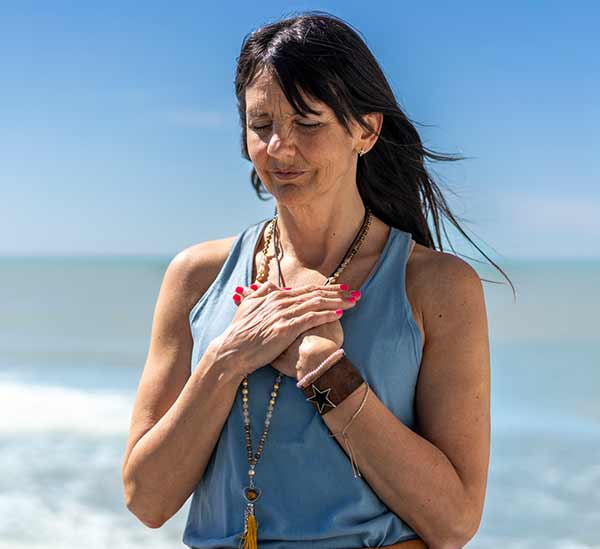
In those moments, I am no longer responding to reality. I am reacting to a narrative my mind has created and then convinced me to believe. This is the architecture of catastrophising, the mind rehearsing worst-case outcomes long before they exist.
Anxiety as Fear of the Future
For me, anxiety is not vague unease, it is directional. It projects forward. It tells me something bad is coming, loss, failure, rejection, humiliation, or collapse. It rehearses imagined outcomes with such intensity that my body reacts as though the threat is already real.
This is the paradox. My mind attempts to protect me by anticipating danger, yet in doing so it creates the very distress I am trying to escape. I end up living not in reality, but in imagined futures, usually bleak ones.
This is the paradox. My mind attempts to protect me by anticipating danger, yet in doing so it creates the very distress I am trying to escape. I end up living not in reality, but in imagined futures, usually bleak ones.
Why the Mind Does This, Intolerance of Uncertainty
At the core of this pattern is something I now recognise clearly. My mind struggles with uncertainty. Uncertainty means I do not know how the future will unfold, and my mind resists not knowing. It seeks certainty, predictability, and control.
So instead of sitting calmly with uncertainty, it fills the gap with assumptions, and more often than not those assumptions are negative. It operates on a flawed belief, if I expect the worst, I will somehow be prepared for it.
In reality, this way of thinking keeps me trapped in a constant state of vigilance, tension, and emotional exhaustion. I am no longer living life as it unfolds. I am bracing for futures that may never arrive.
How This Fed My Drinking
When my thinking became dominated by negativity and catastrophising, the emotional outcome was almost inevitable. I felt overwhelmed. The future appeared threatening, the present felt intolerable, and my internal world became something I desperately wanted to escape from. Alcohol offered temporary relief. It quietened the noise. It interrupted the relentless projections into worst-case scenarios. It gave me a brief sense of ease and escape.
But alcohol created an illusion. The more I relied on alcohol to escape my thinking, the less capable I became of managing life emotionally. My resilience weakened, my fears intensified, and my anxiety deepened. What I believed was the solution was, in reality, reinforcing the very problem I was trying to avoid.
But alcohol created an illusion. The more I relied on alcohol to escape my thinking, the less capable I became of managing life emotionally. My resilience weakened, my fears intensified, and my anxiety deepened. What I believed was the solution was, in reality, reinforcing the very problem I was trying to avoid.
Learning to Sit with Uncertainty
In sobriety, I have had to learn something profoundly uncomfortable for me. I have had to learn how to tolerate uncertainty. To accept that I do not control the future. To recognise that not knowing is part of being human. To understand that many of my thoughts are projections, not predictions.
This has required practice. But I have found that when I do not immediately react to fearful thoughts, they slowly begin to lose their authority over me. When I question them instead of obeying them, my discomfort starts to lift.
I begin to see my thoughts for what they really are, temporary mental events, not facts. As Alcoholics Anonymous says, “Let Go and Let God.” For me, that means learning to stop fighting imaginary futures and returning to the present moment instead.
FEEL OVERWHELMED. REACH OUT. FIND SUPPORT.
Speak to us today for a confidential, no-obligation conversation
Gratitude, The Antidote to Negative Bias
There is, however, an even more powerful corrective I have come to rely upon. Gratitude. When my mind becomes saturated with negative thinking, it grows highly selective. It filters out everything that is working, everything that is stable, and everything that is good in my life.
Gratitude interrupts that distortion. It forces me to redirect my attention and consciously acknowledge what I would otherwise ignore. When I pause and take stock, I begin to see that my life is not defined by the fears my mind presents to me.
I have my health and my mobility. I have people I love and who love me. I have the gift of sobriety. I have another day to live, to grow, and to contribute. None of these truths are visible when I am consumed by anxiety, yet they are always there.
Gratitude does not deny difficulty. It restores proportion. It brings balance back into my thinking by widening the lens through which I view my life. Where negative bias narrows, gratitude expands. Where anxiety predicts loss, gratitude recognises what is already present.
A More Balanced Way of Thinking
Today, when I notice my mind slipping back into old patterns of negativity, I try not to fight it aggressively. I simply recognise it. I remind myself that this is conditioning, not reality.
Then I gently shift my attention back to the present moment, back to what is actually happening, back to what is real, and back to what is good. Gratitude has become a discipline for me. Not a fleeting emotion, but a deliberate daily practice of attention.
Because when I anchor myself in what I am genuinely thankful for, imagined catastrophes begin to lose their power. I am no longer living in the future my mind invents. I am living in the life I actually have.
And it is here, in the clarity of the present moment, supported by gratitude, that I find calm, balance, and stability. It is also here that I remain sober, recognising the futility of using alcohol to escape reality rather than learning how to live within it.
If you think that you or someone you love might have a problem with drug or alcohol addiction, compulsive behaviour or emotional disorders, reach out and speak to our specialist addiction rehab treatment team on our confidential helpline +34 691 881 422. Immediate admission available.

Why Alcoholics Anonymous Works: Altruism and Recovery
Alcoholics Anonymous has helped millions of people achieve and maintain sobriety. Its effectiveness is often attributed to fellowship or spirituality, but the deeper reason lies elsewhere because it addresses.
...

AI Pornography: Increasing the Risks of Porn Addiction
Fake nudes of Taylor Swift that were created using artificial intelligence software flooded social media networks this month. With pornography already highly addictive, could artificial intelligence increase the dangers even more?
...

Addictive Painkillers vs. Non-Addictive Painkillers
Pain is a universal experience, and painkillers offer relief. However, not all pain medications are the same, some carry the risk of addiction, while others provide safe, non-addictive alternatives. Understanding the difference.
...

Why Alcoholics Forget the Pain: The Psychology of Relapse
Psychologists describe a phenomenon known as fading affect bias, the tendency for negative emotional memories to fade faster than positive ones. Pain softens. Anxiety reduces. Shame loses immediacy. Meanwhile, pleasure remain.
...
As far as alcohol is concerned, I am not in control
I had an idyllic family life growing up; my parents were together, and I am the oldest of three siblings. I was educated privately, originally as a day pupil and then I boarded from 16 years old. I met my husband when we were 18
...

The Minefield of Choosing a Rehab Addiction Treatment Centre
When someone you love is struggling with alcohol misuse, drug dependency or compulsive behavioural addictions, the urgency to act can feel overwhelming. Families often search online late at night, confronted by dozens of options.
...
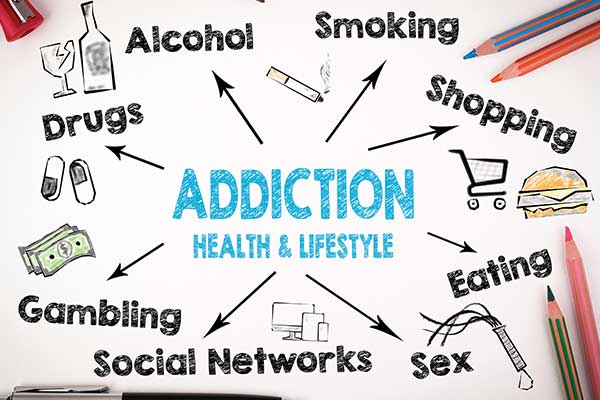
How has the Pandemic Affected our Addictive Behaviours?
When do you know that your flutter at the online casino, posting on your favourite social media sites, playing video games like call of duty, or deliveries from amazon have got out of control? Here are some signs of behavioural addiction.
...
The 27 Club: A cautionary tale of talent, turmoil and tragedy
The 27 Club refers to a group of prominent artists and musicians who tragically died at the age of 27. While many notable figures in the entertainment industry have passed away young, the striking number of high profile cases.
...

